Generative AI has moved from experimental technology to essential tool in advertising creative production. ChatGPT writes ad copy that converts. DALL-E and Midjourney create custom visuals in seconds. AI video tools generate variations at scale. For agencies and advertisers, the question is no longer whether to use generative AI—it is how to use it effectively.
But here is what many practitioners are discovering: generative AI is not a magic button. The quality of output depends heavily on input quality, prompt engineering, and human oversight. The agencies winning with AI are those who understand its capabilities and limitations, and who have built workflows that leverage AI strengths while compensating for weaknesses.
This playbook covers practical applications of generative AI across all aspects of advertising creative—from copywriting to image generation to video production. You will learn specific techniques, see real examples, and get frameworks for implementation that actually work in production environments.
What You Will Learn
Reading Time: 22 minutes | Difficulty: Intermediate
- Using ChatGPT and LLMs for ad copywriting at scale
- AI image generation for advertising visuals
- Automated video creation and editing workflows
- Maintaining brand consistency with AI tools
- Quality control and compliance considerations
- Building efficient AI creative workflows
- Cost analysis: AI vs. traditional creative production
Distribute Your AI-Created Content at Scale
Great creative needs great distribution. Outreachist connects you with premium publishers for sponsored content placements that put your AI-powered campaigns in front of engaged audiences across thousands of quality websites.
Explore Publisher NetworkGenerative AI in Advertising: Key Statistics
of marketers now use generative AI tools
faster creative production with AI assistance
projected generative AI market by 2032
cost reduction in creative production
Sources: McKinsey 2024, HubSpot State of AI, Bloomberg Intelligence
Section 1: ChatGPT and LLMs for Ad Copywriting

Large language models like ChatGPT, Claude, and Gemini have become indispensable tools for ad copywriting. They excel at generating variations, adapting tone, and producing high volumes of copy that would take human writers significantly longer to create.
What LLMs Do Well for Ad Copy
Variation Generation
Generate 50 headline variations in minutes. Test more options, find winners faster. Perfect for RSAs and multivariate testing.
Tone Adaptation
Rewrite copy for different audiences, platforms, or brand voices. Maintain consistency while adapting to context.
Format Conversion
Transform long-form content into ad copy, or expand bullet points into compelling descriptions.
Localization
Adapt copy for different markets, languages, and cultural contexts while preserving intent.
Prompt Engineering for Ad Copy
The quality of AI-generated copy depends heavily on prompt quality. Here is a framework for effective ad copy prompts:
// Effective Ad Copy Prompt Template
Role: You are an expert direct response copywriter specializing in [industry].
Context: [Product/service description, key benefits, target audience]
Task: Write [number] [ad type] headlines that [specific goal].
Constraints: Max [X] characters. Include [keyword]. Tone: [description].
Examples: [2-3 examples of desired output style]
Output format: Numbered list with character count for each.
Real-World Ad Copy Workflow
Ad Copy Types and AI Performance
Section 2: AI Image Generation for Advertising
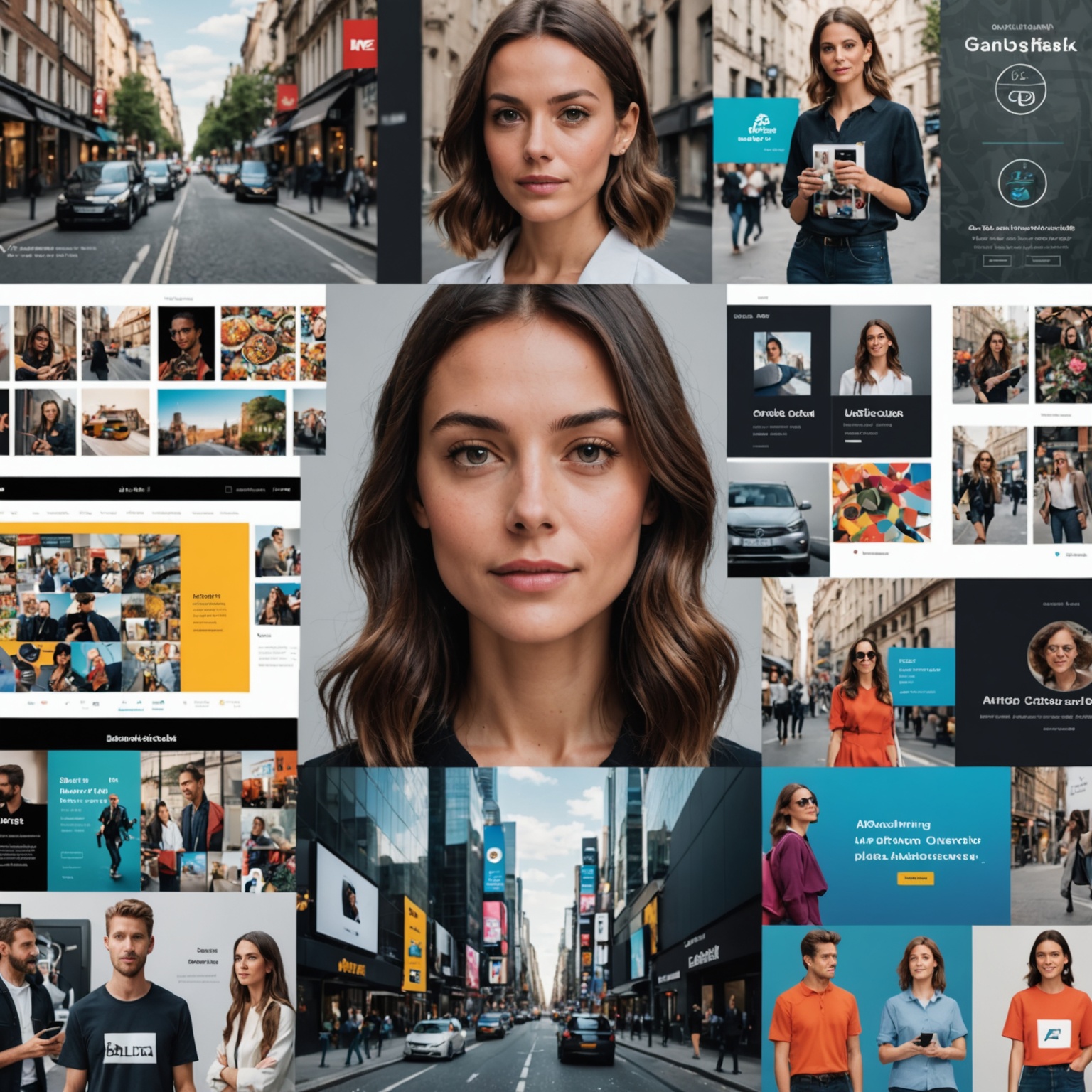
AI image generation has progressed from novelty to production-ready tool. DALL-E 3, Midjourney, and Stable Diffusion can create custom advertising visuals that previously required expensive photo shoots or stock licensing.
When to Use AI-Generated Images
Best Use Cases
- Concept visualization and mockups
- Abstract and stylized imagery
- Product lifestyle contexts
- Seasonal and holiday variations
- A/B testing visual concepts
- Social media content at scale
Avoid For
- Specific product photography
- Images requiring brand assets
- Content with recognizable people
- Text-heavy designs
- Precise technical illustrations
- Legally sensitive contexts
Image Generation Prompt Framework
Effective image prompts follow a specific structure:
The SCAM Framework for Image Prompts
- Subject: What is the main focus? Be specific about objects, people, scenes.
- Context: Where is this happening? Environment, setting, time of day.
- Aesthetic: What style? Photography, illustration, 3D render, color palette.
- Mood: What feeling? Professional, playful, luxurious, energetic.
Platform Comparison for Advertising Use
Scale Your Content Distribution
AI helps you create more content faster. Outreachist helps you distribute it further. Connect with thousands of publishers for sponsored content placements that amplify your campaigns.
Browse PublishersSection 3: AI Video Creation for Advertising

Video has traditionally been the most expensive and time-consuming advertising format to produce. AI is changing this equation dramatically, enabling video creation at a fraction of traditional costs.
AI Video Tool Categories
Text-to-Video
Generate video from text descriptions. Runway, Pika, Sora (coming).
Best for: Concept videos, abstract content
Image-to-Video
Animate static images with motion. Runway, D-ID, HeyGen.
Best for: Product animations, talking heads
Template-Based
Automated video assembly. Synthesia, InVideo, Pictory.
Best for: Explainer videos, social ads
AI Editing
Automated editing of existing footage. Descript, Kapwing, Veed.
Best for: Repurposing content, quick edits
Video Production Workflow with AI
Efficient AI Video Production Process
- Script generation: Use ChatGPT to write video scripts from brief
- Visual planning: Generate storyboard images with DALL-E/Midjourney
- Asset creation: Create/source video clips, animate images
- Voiceover: Generate AI voiceover or record human VO
- Assembly: Use template tools to combine elements
- Variations: Generate format/length variations automatically
Section 4: Maintaining Brand Consistency

One of the biggest concerns with AI creative generation is maintaining brand consistency. Without proper guardrails, AI can produce off-brand content that dilutes brand identity or creates legal issues.
Building Brand Guardrails for AI
Creating a Brand AI Toolkit
Build reusable assets that ensure consistency:
- Custom GPT/Claude Projects: Pre-loaded with brand guidelines, approved messaging, and examples
- Prompt Library: Tested prompts for common creative needs with brand parameters built in
- Style References: Curated image sets that represent desired visual direction
- Negative Prompts: Lists of what to avoid—competitors, problematic imagery, off-brand elements
- Review Checklists: Structured review process for AI-generated content
Section 5: Building AI Creative Workflows
Successful AI creative implementation requires thoughtful workflow design. Here is how to structure your process for efficiency and quality.
The AI-Augmented Creative Process
Recommended Workflow Structure
Human: Define objectives, audience, KPIs
AI + Human: Generate concepts and variations
AI: Create drafts at scale
Human: Select and refine best options
Human: Compliance and brand check
Cost-Benefit Analysis
Important Note on Quality vs. Cost
AI cost savings are significant for volume and iteration. However, flagship campaigns, brand-defining creative, and legally sensitive content still benefit from human-led production. The best approach is hybrid: AI for scale and iteration, human expertise for strategy and polish.
Section 6: Quality Control and Compliance
AI-generated content introduces new risks that require systematic quality control processes.
Common AI Creative Issues
- Hallucinations: AI may generate false claims or inaccurate information
- Brand inconsistency: Subtle deviations from brand guidelines
- Legal risks: Copyright concerns, trademark issues, unsubstantiated claims
- Cultural insensitivity: AI may not understand cultural nuances
- Quality variation: Inconsistent output quality across generations
Quality Control Checklist
AI Creative Review Process
- Verify all factual claims against reliable sources
- Check for trademark and copyright compliance
- Review against brand voice and visual guidelines
- Test for cultural sensitivity across target markets
- Confirm FTC/regulatory disclosure requirements
- Validate performance claims are substantiated
- Review image compositions for unintended elements
Put Your AI Creative to Work
You have the tools to create great content at scale. Now you need the distribution to match. Outreachist connects you with thousands of quality publishers for sponsored content, guest posts, and brand placements that amplify your campaigns.
- 5,000+ verified publishers across industries
- Transparent pricing and quality metrics
- Streamlined workflow for content placement
- Full campaign tracking and reporting
Key Takeaways
- AI accelerates, not replaces: Generative AI is a powerful tool for scaling creative production, but human strategy and oversight remain essential.
- Prompt quality equals output quality: Invest time in developing effective prompts and templates for consistent results.
- Build brand guardrails: Create systematic approaches to maintain brand consistency across AI-generated content.
- Workflow design matters: Structured workflows that combine AI efficiency with human judgment produce the best results.
- Cost savings are real: AI can reduce creative production costs by 40-80% while increasing output volume.
- Quality control is non-negotiable: Human review processes are essential for catching AI errors and ensuring compliance.
Conclusion
Generative AI has fundamentally changed the economics and velocity of advertising creative production. Agencies and advertisers who master these tools will produce more content, test more variations, and iterate faster than competitors still relying on traditional production methods.
But mastery requires more than just access to tools. It requires understanding what AI does well and where it falls short. It requires building workflows that leverage AI strengths while compensating for weaknesses. And it requires maintaining the human judgment that ensures quality, brand consistency, and compliance.
Start with the highest-volume, lowest-risk applications: ad copy variations, social media images, video thumbnails. Build your prompt libraries and review processes. Then gradually expand to more complex applications as your team develops expertise. The agencies that invest in AI creative capabilities now will have significant advantages as these tools continue to improve.
About Outreachist
Outreachist is the premier marketplace connecting advertisers with high-quality publishers for guest posts, sponsored content, and link building opportunities. Our platform features 5,000+ verified publishers across every industry, with transparent metrics and secure transactions.
Browse our marketplace | Create a free account | Learn how it works